

The weight of a saddle bag is a crucial factor that both cyclists and motorcyclists need to consider when making their choice. As a leading saddle bag supplier, we understand the significance of this aspect and are here to provide you with in - depth insights.
Understanding the Importance of Saddle Bag Weight
The weight of a saddle bag can have a profound impact on the overall performance and comfort of your ride. For cyclists, every extra ounce matters. A heavy saddle bag can slow down your speed, increase the energy required to pedal, and even affect your balance. When you're climbing steep hills or competing in a race, a lighter saddle bag can give you a significant advantage.
On the other hand, motorcyclists also need to pay attention to saddle bag weight. An overly heavy bag can affect the motorcycle's handling, especially when taking sharp turns or at high speeds. It can also put additional stress on the suspension and other components of the bike, potentially leading to premature wear and tear.
Factors Affecting Saddle Bag Weight
Several factors contribute to the weight of a saddle bag. The first and most obvious is the material. Saddle bags can be made from a variety of materials, each with its own weight characteristics.
- Leather: Leather is a classic material for saddle bags. It is durable, looks great, and has a certain charm. However, leather is relatively heavy compared to some other materials. A Motorcycle Bicycle Hard Saddle Leather Bag made from high - quality leather can add a substantial amount of weight to your bike. The tanning process, the thickness of the leather, and any additional treatments can all affect its final weight.
- Nylon and Polyester: These synthetic materials are lightweight and often used in modern saddle bags. They are resistant to water, abrasion, and tearing, making them a practical choice for many riders. A nylon or polyester saddle bag can be significantly lighter than a leather one, which is ideal for those who are looking to minimize weight.
- Hard Plastic or Fiberglass: Hard - shell saddle bags made from plastic or fiberglass are known for their durability and protection. They can withstand impacts and keep your belongings safe. However, they are generally heavier than soft - sided bags. The thickness of the plastic or fiberglass and the design of the bag (including any additional reinforcements) will determine its weight.
The size and capacity of the saddle bag also play a role in its weight. Larger bags that can hold more items will naturally be heavier, even when empty. A big Olive Green Bicycle Luggage Rack Bag designed to carry camping gear or a week's worth of clothes will weigh more than a small, minimalist bag for carrying just a few essentials.
In addition, the number of compartments, zippers, and other accessories can add to the weight. A saddle bag with multiple compartments and heavy - duty zippers will be heavier than a simple, single - compartment bag.
Typical Weight Ranges
The weight of saddle bags can vary widely depending on the factors mentioned above.
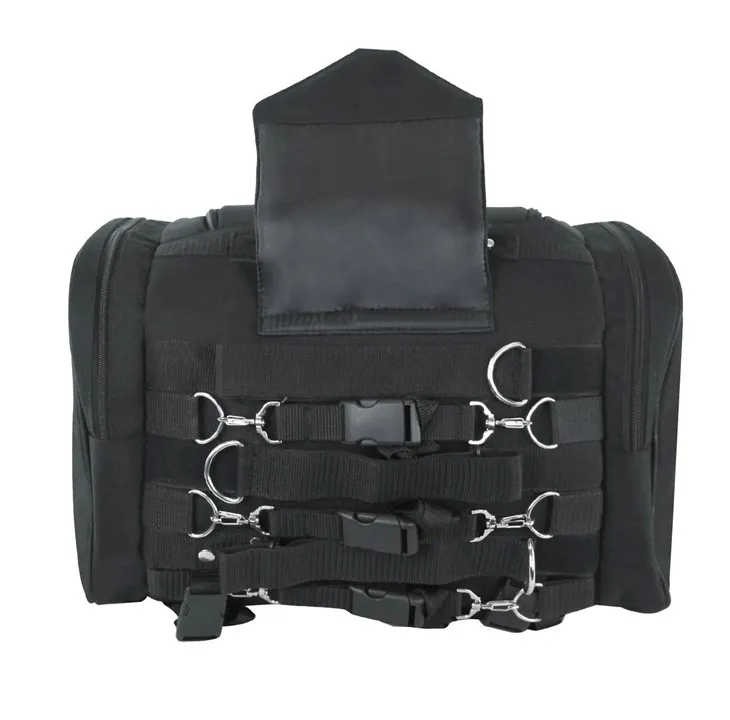

- Small Bicycle Saddle Bags: These are usually designed to hold small items such as a tube, a multi - tool, and a phone. They are typically made from lightweight nylon or polyester. On average, a small bicycle saddle bag can weigh anywhere from 100 to 300 grams. For example, a basic Bicycle Frame Saddle Bag might weigh around 150 grams.
- Medium - Sized Bicycle Saddle Bags: These bags have a larger capacity and can hold more items, such as a rain jacket, a snack, and a small camera. They may have more compartments and better organization. A medium - sized bicycle saddle bag can weigh between 300 and 600 grams.
- Large Bicycle Saddle Bags and Luggage Rack Bags: These are designed for long - distance touring or commuting with a lot of gear. They can hold clothes, camping equipment, and other essentials. A large bicycle saddle bag or luggage rack bag can weigh 600 grams to over a kilogram, depending on the material and design.
For motorcycle saddle bags, the weight range is even broader. Small, auxiliary motorcycle saddle bags can weigh around 1 to 2 kilograms, while large, full - sized touring saddle bags can weigh 5 to 10 kilograms or more, especially if they are made from heavy - duty materials like leather or hard plastic.
Balancing Weight and Functionality
When choosing a saddle bag, it's important to find the right balance between weight and functionality. You don't want to sacrifice too much in terms of storage space and features just to save a few grams. At the same time, you also don't want to carry around unnecessary weight.
Consider your specific needs. If you're a casual cyclist who only goes on short rides, a lightweight, small - capacity saddle bag might be sufficient. But if you're a long - distance cyclist or a motorcycle tourer, you'll need a bag with more capacity, even if it means a slightly higher weight.
Our company offers a wide range of saddle bags to meet different needs. Whether you're looking for a lightweight, minimalist bag or a heavy - duty, high - capacity one, we have the perfect solution for you. We carefully select materials and designs to ensure that our saddle bags offer the best combination of weight, durability, and functionality.
Conclusion
The weight of a saddle bag is an important consideration that can affect your riding experience. By understanding the factors that influence saddle bag weight and the typical weight ranges, you can make an informed decision when choosing a saddle bag.
As a trusted saddle bag supplier, we are committed to providing high - quality products that meet the diverse needs of our customers. If you're interested in our saddle bags or have any questions about their weight, capacity, or other features, we encourage you to contact us for procurement and further discussion. We look forward to serving you and helping you find the perfect saddle bag for your rides.
References
- Wilson, J. (2018). The Ultimate Guide to Cycling Gear. Cycling Press.
- Brown, M. (2020). Motorcycle Touring: Equipment and Essentials. Motor World Publications.